


Generator Cost & Buying Guide for Columbus Homeowners
Everything you need to know about whole-house generator pricing, sizing, and installation
How Much Does a Whole House Generator Cost?
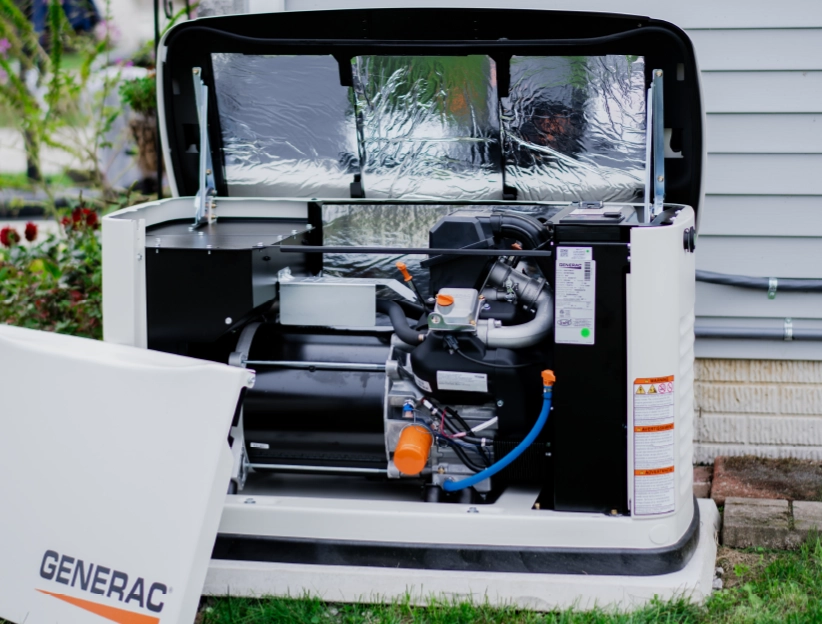
For most Columbus homeowners, a professionally installed Generac home standby generator typically ranges from $8,000 to $15,000, depending on your home’s size, power needs, and specific installation requirements.
This investment includes:
- The generator unit itself
- Professional installation by licensed electricians
- Necessary permits and inspections
- Electrical connections and transfer switch
- Gas line work (if needed)
- Concrete pad or mounting
Understanding Whole House Generator Pricing
By Home Size
1,000-2,000 SQ FT HOMES:
RECOMMENDED:
10-18kW generator
TYPICAL COST RANGE:
$8,000-$11,000
MOST COMMON
2,000-3,500 SQ FT HOMES:
RECOMMENDED:
18-24kW generator
TYPICAL COST RANGE:
$10,000-$15,000
3,500+ SQ FT HOMES:
RECOMMENDED:
28kW generator
TYPICAL COST RANGE:
$12,000-$18,000
What Affects Your Generator Installation Cost?
- Fuel Source: Natural gas or propane installations are typically. If your home doesn’t have natural gas or propane access, you’ll need a propane tank installation, which adds to the upfront cost.
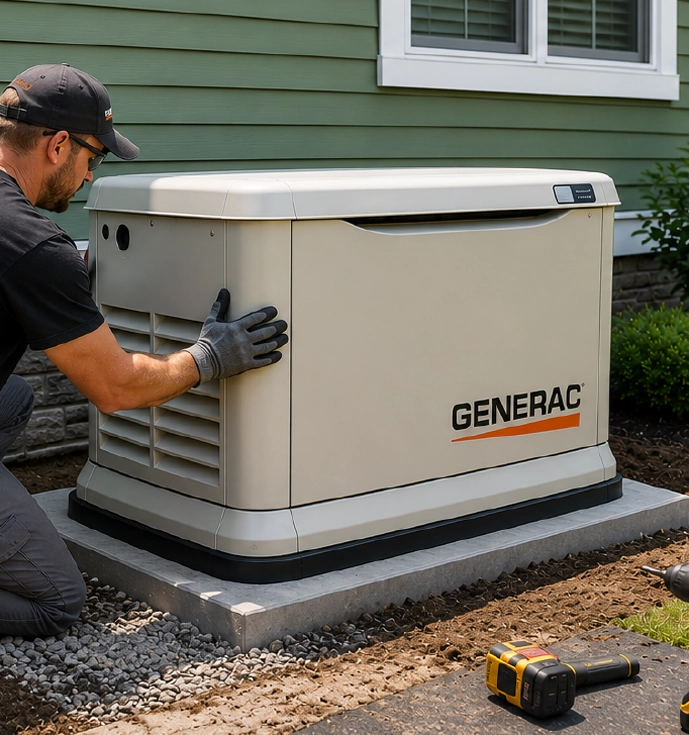
- Placement and Installation Complexity: Generator clearance requirements and your home’s layout affect installation costs. Generators placed close to existing gas and electrical connections cost less to install than those requiring extensive trenching or wiring runs.
- Transfer Switch Type: Whole-house coverage typically requires a larger generator than partial coverage, affecting the overall cost.
What Size Generator Do I Need for My Home?
Choosing the right generator size ensures you have enough power when you need it without overspending on unnecessary capacity.
WHOLE HOUSE COVERAGE
Most homes require a generator between 14kW and 28kW for complete coverage of your entire home—including HVAC, all lights and outlets, kitchen appliances, and everything else you use daily. You may also want to consider additional loads like hot tubs or swimming pools.
PARTIAL HOME/ESSENTIAL SYSTEMS COVERAGE
If a whole-house generator exceeds your budget, we can design a system that powers your essential circuits at a lower cost. But what does “essential” mean for your home?
Ask yourself these questions:
During a power outage—whether it lasts one hour or two days—what’s most important to you?
- Do you need lights throughout your home, or just in key rooms?
- Is heating or cooling a priority?
- Do you need to keep food fresh (refrigerator and freezer)?
- Can you microwave or prepare food?
- Are you on city water, or do you have a well pump?
- Is your hot water tank electric or gas?
- Do you have a sump pump protecting your basement?
- Do you work from home and need to power your office?
- Does anyone in your home rely on medical equipment?
What our customers typically choose for essential coverage:
Many of our customers have selected a 10kW-18kW generator to power combinations like:
- Refrigerator and freezer
- Furnace or AC
- Sump pump and well pump (if applicable)
- Select lights and outlets in main living areas
- Basic electronics and charging stations
GENERATOR CLEARANCE REQUIREMENTS:
Where Can You Install A Generator?
Generac and local building codes require specific clearances for safe generator installation. Understanding these requirements helps you plan for installation costs and determine the best placement for your unit.
REQUIRED CLEARANCES:

From Your Home:
- Minimum 18 inches from walls, windows, and doors
- 60 inches from windows that open or vent
- 36 inches from any adjacent wall of your home

From Other Structures:
- 36 inches from air conditioning units
- 36 inches from other equipment or obstructions
- Consider future access needs for service and maintenance

Ventilation Requirements:
- Adequate airflow on all sides for cooling
- Protection from snow accumulation in winter
- Clear space for exhaust ventilation
COMMON PLACEMENT LOCATIONS:
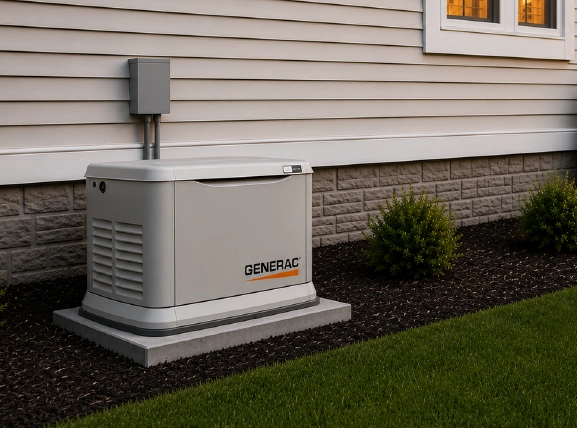
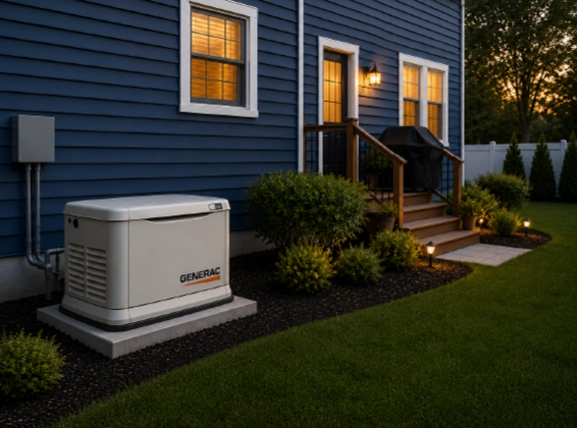
Side of Home
Typically offers the best balance of accessibility, generator clearance requirements, and proximity to gas and electrical connections.
Behind Home
Can work well if you have adequate space and want the generator less visible from the street. May require longer wiring and gas runs.
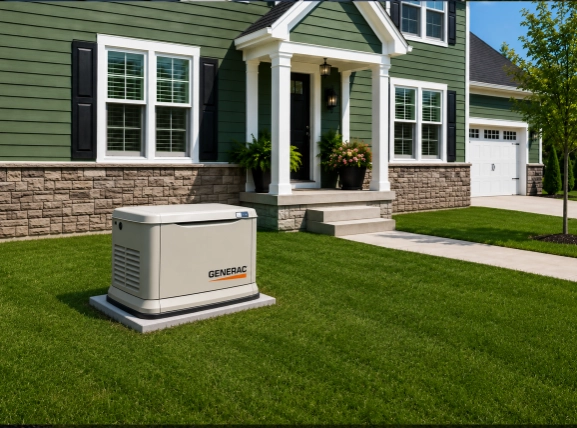
Front Yard
Sometimes necessary for homes with limited side or rear access, though local ordinances may restrict front-yard placement.
IS A GENERATOR WORTH THE INVESTMENT?
When Generators Pay for Themselves
Many homeowners don’t realize the potential costs of extended power outages:

Basement Flooding
Without power, your sump pump can’t protect your basement. Basement water damage and remediation often cost $5,000-$15,000 or more.

Food Loss
A full fridge and freezer of food can represent $500-$2,000 in losses during an extended outage.

Home Office Disruption
For those working from home, a generator ensures you never miss an important conference call or deadline. The cost of lost income from even a few days without power can be substantial.

Medical Equipment
For families relying on medical equipment, a generator isn’t a luxury—it’s a necessity that provides priceless peace of mind.

Property Damage Prevention
Frozen pipes in winter, hot water heater failures, or HVAC issues during extreme weather can each cost thousands to repair.
MAKING YOUR GENERATOR MORE AFFORDABLE
Financing Options
At Weekley Electric, we understand that a generator is a significant investment. That’s why we offer financing options to fit your budget.
Rather than paying the full cost upfront, you can spread payments over time—similar to financing a new HVAC system or other major home improvement. Many homeowners find that monthly payments are manageable when considering the protection and peace of mind a generator provides.
Contact us to learn about current financing offers.
Limited-Time Promotions
We regularly offer manufacturer promotions, including extended warranties and special pricing. Check our current promotions to see what’s available now.

WHY CHOOSE A GENERAC HOME STANDBY GENERATOR?
Automatic Operation
Your Generac automatic home standby generator monitors your power 24/7. When an outage occurs, it automatically starts within seconds—whether you’re home or away.
Reliable Performance
Generac is America’s most trusted generator brand, and as an authorized Generac dealer, Weekley Electric provides:
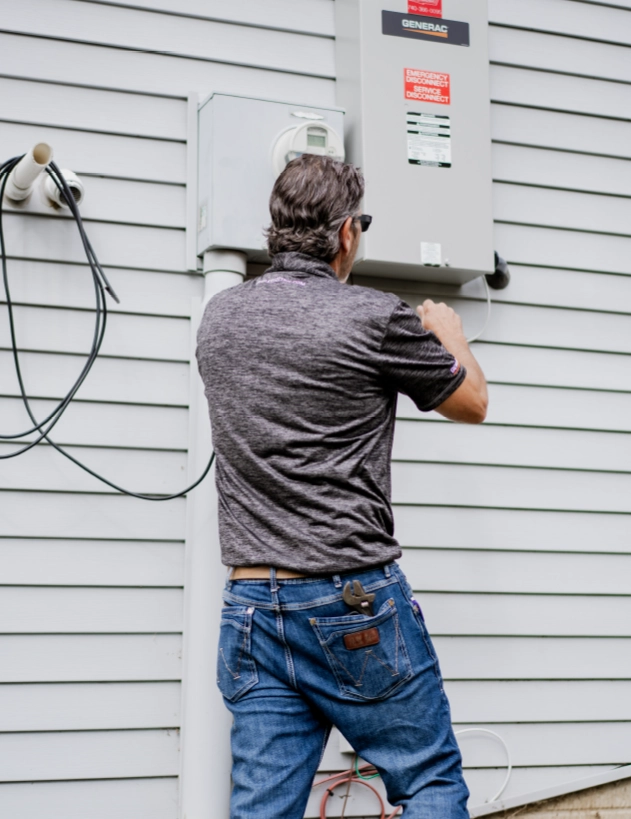
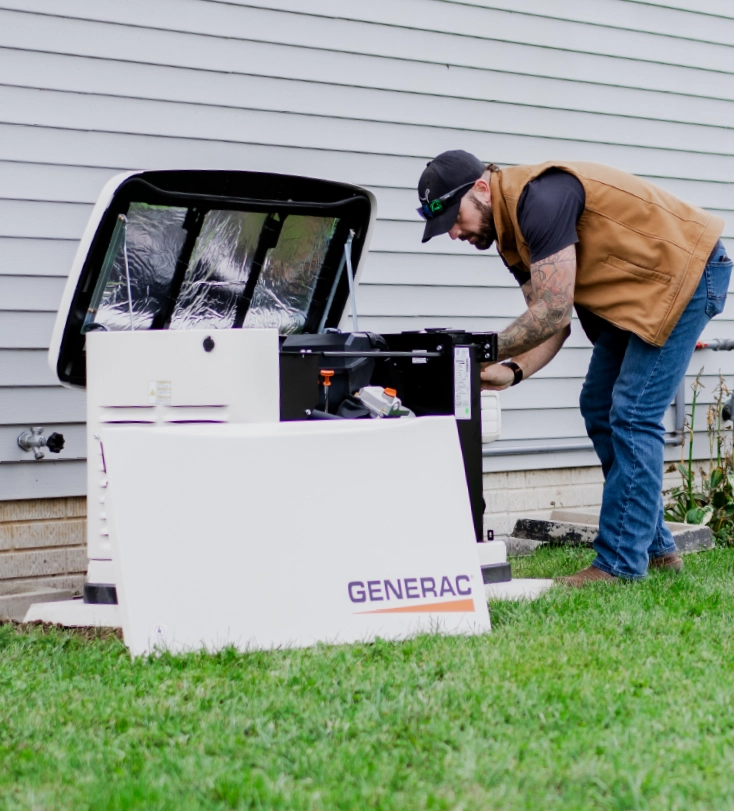
- Factory-trained installation technicians
- Proper sizing and setup
- Manufacturer warranty support
- Professional ongoing maintenance
FREQUENTLY ASKED QUESTIONS ABOUT GENERATOR COSTS
If you’ve lived in Central Ohio for any length of time, you’ve experienced the frustration of power outages—whether from winter ice storms that snap power lines when you need heat most, summer thunderstorms that leave you sweltering in the dark, or high winds that bring down trees onto electrical infrastructure. Columbus-area homeowners face multiple outage risks throughout the year, from severe weather events to grid strain during temperature extremes that can trigger rolling blackouts. For families with sump pumps protecting finished basements, those working from home, anyone with medical equipment needs, or homeowners who simply want to protect their food, comfort, and peace of mind, a Generac automatic home standby generator isn’t just convenient—it’s essential protection for your home and family.
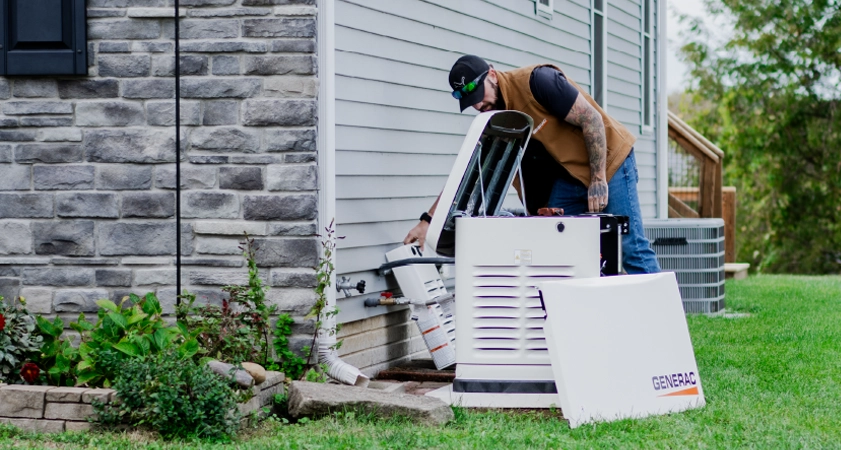
While some homeowners consider DIY installation to reduce their Generac generator installation cost, generators require:
- Licensed electrical work for transfer switch installation
- Proper gas line installation (natural gas or propane)
- Permit acquisition and inspections
- Code compliance for clearances and installation
- Manufacturer warranty registration (which may require professional installation)
Professional installation ensures your generator operates safely and reliably when you need it most.
With proper maintenance, a Generac home standby generator typically lasts 15-20 years. Regular annual maintenance helps maximize your generator’s lifespan and ensures it performs when needed.
While exact value increases are difficult to quantify, a professionally installed generator is a desirable feature for many home buyers, particularly in areas with frequent outages. More importantly, it protects your current investment by preventing costly damage during power outages.
Generac automatic home standby generators run weekly self-tests to ensure they’re ready. Professional annual maintenance includes:
- Oil and filter changes
- Air filter replacement
- Battery check
- System testing
- Visual inspection
Think of it like maintaining your car—regular service keeps your generator running reliably for years.
Yes! Generators and solar panels serve different purposes. Solar provides cost savings during normal operation, while generators ensure backup power during outages (when solar panels typically shut down for safety). Many homeowners benefit from both systems.